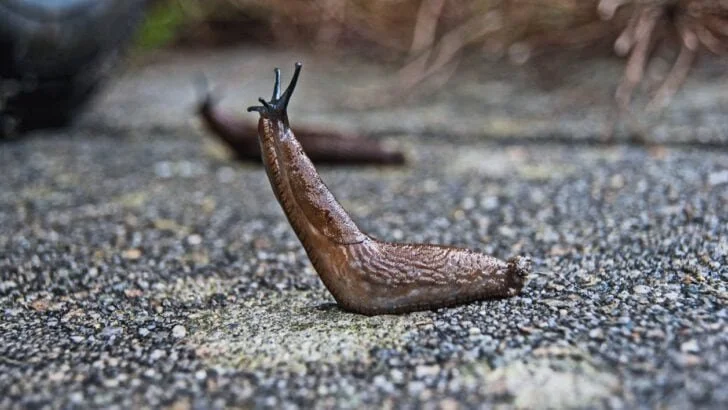
Slugs to to War and Save American Lives.
Slugs go to War to Save Americal Lives.
My post this week books at a very strange aspect of World War One, the use of slugs and snails to detect mustard gas. These molluscs were conscripted into the American army in 1918 to form a special SlugBrigade to serve in the trenches for the early detection of mustard gas, saving thousands of Doughboys from death and injury. True or False?
Do slugs save soldiers from mustard gas?
If you do a Google search, or indulge your favourite AI tool, using search terms such as “slugs snails and mustard gas” you will come across several short articles, blogs and comments, etc., that will assure you that slugs were used in World War One to save American soldiers from a terrible death due to mustard gas. Most of these articles are repetitive, apparently drawing on the same unspecified source.
The general gist of these articles runs something like this,
“During World War One the United States developed leopard slugs (Limax maxinmus) as an early warning system for mustard gas attacks. These slugs were roughly 3 times more sensitive to the chemicals than humans, capable of detecting just one part of mustard gas in 10 to 12 million particles of air. By the end of the war this Slug Brigade was credited with saving thousands of lives during its five months tour of duty.”
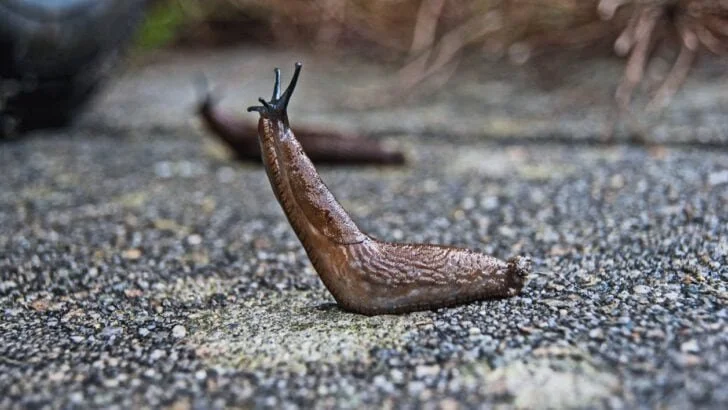
Rationale for using slugs. Their response to mustard gas.
The claim is that slugs respond to mustard gas is very low concentration’s by,
· Contract and compress their bodies, presumable to reduce exposure
· Close their breathing pores
· Make distress movements with their tentacles.
As these signs are seen at lower concentrations that can be detected by humans it was time for the troops to put on their gas masks.
Advantages of slugs over other biological detectors.
· Unlike canaries or mice slug survive the gas exposure.
· They are more sensitive than can canaries or other species
· Slugs are small, easily carries in the trenches and cheap.
Why Slugs? In an article to highlight five animals that made significant contributions to the Great War, How did animals (even slugs) serve in World War I? the National Museum of American History, gives this account of how slugs came to be used as gas detectors. (https://americanhistory.si.edu/explore/stories/how-did-animals-even-slugs-serve-world-war-i)
Before, during, and after World War One Dr Paul Bartsch was the Curator of the US National Museum’s Division of Molluscs.[1] Bartsch often conducted experiments at home and one day some slugs he was studying escaped and ended up in his furnace room and when he found them he noticed that their behaviour was unusual. Curious he carried out further experiments and demonstrated that their behaviour changed when the slugs became visibly distressed when exposed to low concentrations of gas and fumes from his boiler. There matters rested until late in the war when, in 1917, reports began to appear about the effects of battlefield gases on American troops who were coming into action on the European battlefields for the first time. According to documents in the Smithsonian Archives Bartsch turned again to his slugs and demonstrated that they were responsive to very low concentrations of Mustard Gas detecting it at a concentration of 1in 10,000,000 compared to humans at 1 in 4,000,000 a concentration that already produced toxic effects. Bartsch sent a report to his findings to the United States military who took the matter seriously and in June 1918 created a slug brigade which operated in the frontline trenches to detect mustard gas and is credited with saving thousands of American lives in the last four months of the war.
The Scientific Evidence. The scientific evidence in the public domain that may provide evidence that slugs are good detectors of chemical warfare agents, such as mustard gas are sparce to say the least!!
1. The article quoted about suggests that information on Bartsch’s experiment’s exists in the Smithsonian Archives but gives no further information
2. Slugs ate mentioned in The Medical Department of the United States Army in World War One. Vol. IV Medical Aspects of Gas Warfare.
https://babel.hathitrust.org/cgi/pt?id=uva.x004311915&seq=5&q1=slugs
p 723. Usefulness of French species of snail for the detection of mustard gas NOT foundso unsuitable as a field indicator of mustard gas.
P 761. Special report No.15. The behaviour of certain slugs and snails in the presence of dichlorethylsulphide.[2] This is a short report of two types of experiments on slugs carried out by the gas Service in France in response from a telegram from the USA (War Department?) sting that slugs were very sensitive to mustard gas, 2 parts per million, and may be suitable as field detectors.
Series 1. Two slugs painted with mustard oil from a German gas shell. Slugs responded immediately by contracting and discharging large volumes of mucus. Partially recovered after a few days and still alive after two weeks,
Series 2. 12 slugs exposed to vapour from contents of same shell. Slugs responded by shrinking and reduced mobility. As these responses were almost identical to those seen when slugs exposed to other irritants such as tobacco smoke it was concluded that slugs were unsuitable as field detectors.
As a retired experimental pharmacologist I consider these experiments inadequate when it comes to determine the sensitivity of slugs to mustard gas and more detailed labotary and field testing would have been useful.
What is needed is some definitive documentation on this US Army Slug Brigade and its activities.
J M Sneddon 15 Feb. 2026.
[1] Now the National Museum of Natural History, part of the Smithsonian Institute.
[2] bis(2-chloroethyl) sulphide (Mustard Gas)